
Comprehensive FAQs on Company Incorporation in Kenya
Whether you’re a local entrepreneur or a foreign investor, understanding the legal framework for business incorporation in Kenya is essential.
Details

Whether you’re a local entrepreneur or a foreign investor, understanding the legal framework for business incorporation in Kenya is essential.
Details
Land remains Kenya’s most valuable and most regulated asset. Article 60(1) of the Constitution of Kenya, 2010 commands that land in Kenya shall be held, used and managed in a manner that is equitable, efficient, productive and sustainable.
Details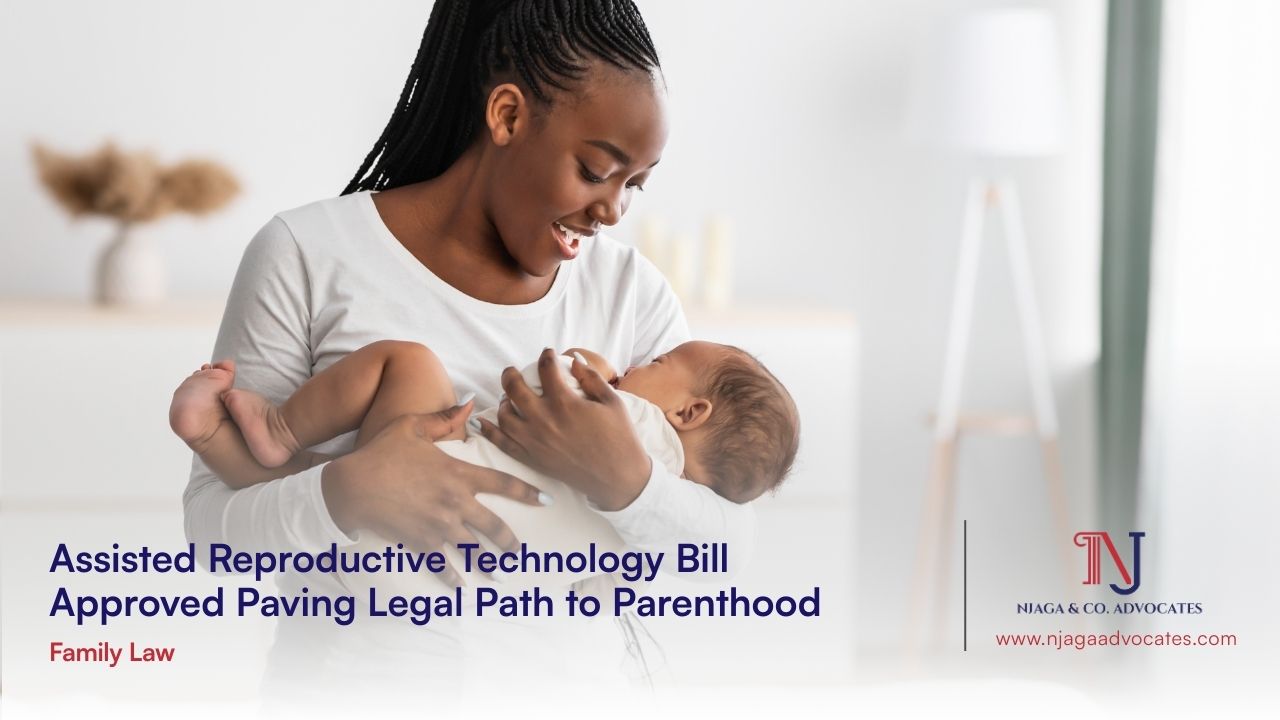
Lawmakers have handed a lifeline to couples who are incapable of conceiving naturally after the National Assembly approved a crucial Bill seeking to leverage reproductive health technology to support parenthood.
Details
Learn how to protect and register copyright in Kenya. Explore copyright laws, KECOBO registration, ownership, infringement, licensing, enforcement, and creators’ rights under the Copyright Act.
Details
Grounds for dissolving a Christian marriage in Kenya include adultery, cruelty, desertion, exceptional depravity, or irretrievable breakdown.
Details
In today’s business landscape, the concept of Environmental, Social, and Governance (ESG) has become a critical framework for evaluating companies’ sustainability and ethical impact.
Details
Kenyan contract law is anchored in the principle of pacta sunt servanda, freedom of contracts, and the notion that parties are bound by their contracts and must honour their terms.
Details
Analyzing the Kenyan Employment Act, 2007 to help employers understand their employment obligations and be compliant with the labor laws.
Details
The doctrine of innocent purchaser for value has long been a cornerstone of property law, providing protection to individuals who purchase property in good faith.
Details
As the world continues its march into the digital age, Kenya has taken a bold step toward regulating one of the most transformative yet contentious sectors of the modern economy, cryptocurrencies and virtual assets.
Details