
Guide to the Class B Permit in Kenya (Agriculture and Animal Husbandry)
The Class B Permit is a crucial immigration document for foreign nationals seeking to engage in agriculture or animal husbandry in Kenya, either individually or in partnership.


Discover expert legal insights, practical guides, and in-depth analysis from Njaga & Co Advocates LLP covering Kenyan law, business, property, immigration, succession, employment, intellectual property, and emerging legal developments.
Discover expert legal insights, practical guides, and in-depth analysis from Njaga & Co Advocates LLP covering Kenyan law, business, property, immigration, succession, employment, intellectual property, and emerging legal developments.
The Class B Permit is a crucial immigration document for foreign nationals seeking to engage in agriculture or animal husbandry in Kenya, either individually or in partnership.

Kenya is a preferred destination for international couples seeking to formalize their union, whether between a Kenyan and a foreign national or two foreign nationals.

Kenya’s legal framework on mergers and acquisitions (M&A) plays a vital role in regulating business consolidations, ensuring fair competition, and safeguarding consumer interests.

In an increasingly globalized world, individuals and businesses often find themselves needing to use documents in foreign countries.

Trademark infringement in Kenya occurs when someone uses a mark that is identical to or confusingly similar to a registered trademark without authorization, in a manner likely to deceive or cause confusion among consumers regarding the origin of goods or services.
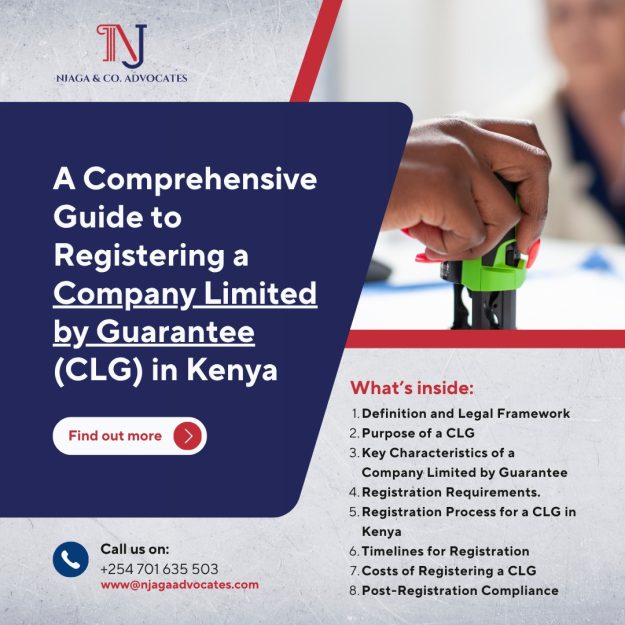
A Company Limited by Guarantee (CLG) is a unique legal entity commonly used by non-profit organizations, including charities, NGOs, professional associations, churches, and social enterprises.

A charge or security interest over immovable property is a legal mechanism that allows a lender (chargee) to secure a loan or obligation using real estate as collateral.

Kenya’s land registration system has historically been fragmented, governed by multiple laws and registers, leading to inefficiencies, legal uncertainties, and increased risk of fraud.

A trust is a legal arrangement where a person (the settlor) transfers assets (trust property) to trustees, who manage them to benefit the designated beneficiaries.

As the world continues its march into the digital age, Kenya has taken a bold step toward regulating one of the most transformative yet contentious sectors of the modern economy, cryptocurrencies and virtual assets.